
25 October 2026 | Day 49 of the voyage
Exodus is moving again as the front approaches
After hours of barely moving, Exodus is making way again. The approaching system presents the fleet with a shared question, but very different conditions from boat to boat.
Until yesterday, we were waiting for wind. Now the question is how much each sailor will meet. On the map, everyone is in the same ocean. But Damien farther south and Dani to his north are not expected to experience the same system with the same intensity. A low-pressure system is not a uniform patch of weather: position relative to it changes wind direction, strength and the seas encountered.
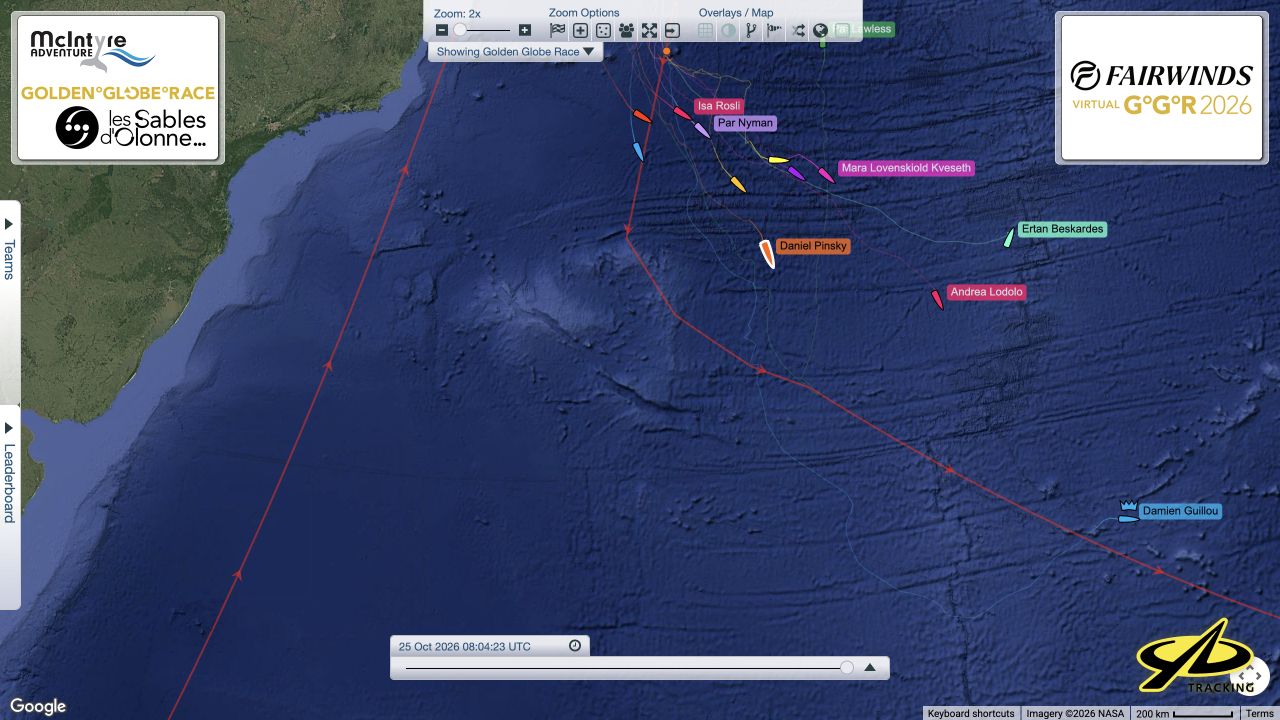
Another thing to remember when looking at the map colours: this is a forecast, not a window from the deck. Omri noted this in recent messages, and yesterday’s race report gave a tangible example: Exodus was barely moving, and Don McIntyre explained that the unusual track direction came from drifting in light wind. A map may colour an area with favourable wind; the boat still has to find it.
This morning brought a change. In the four hours ending at 06:00 Israel time, Exodus averaged 5.9 knots between position reports. Dani appears fourth in the tracking table. After the long wait, it is a return to movement, but now every extra mile also changes where the boat will meet the front.
According to the GGR report of 24 October, Dani’s more northerly position may reduce his exposure to the worst part of the system, while still bringing a significant increase in wind. Damien, farther south, was expected to face a more demanding encounter. That was yesterday’s forecast; reports from the boats will tell us what the passage was actually like.
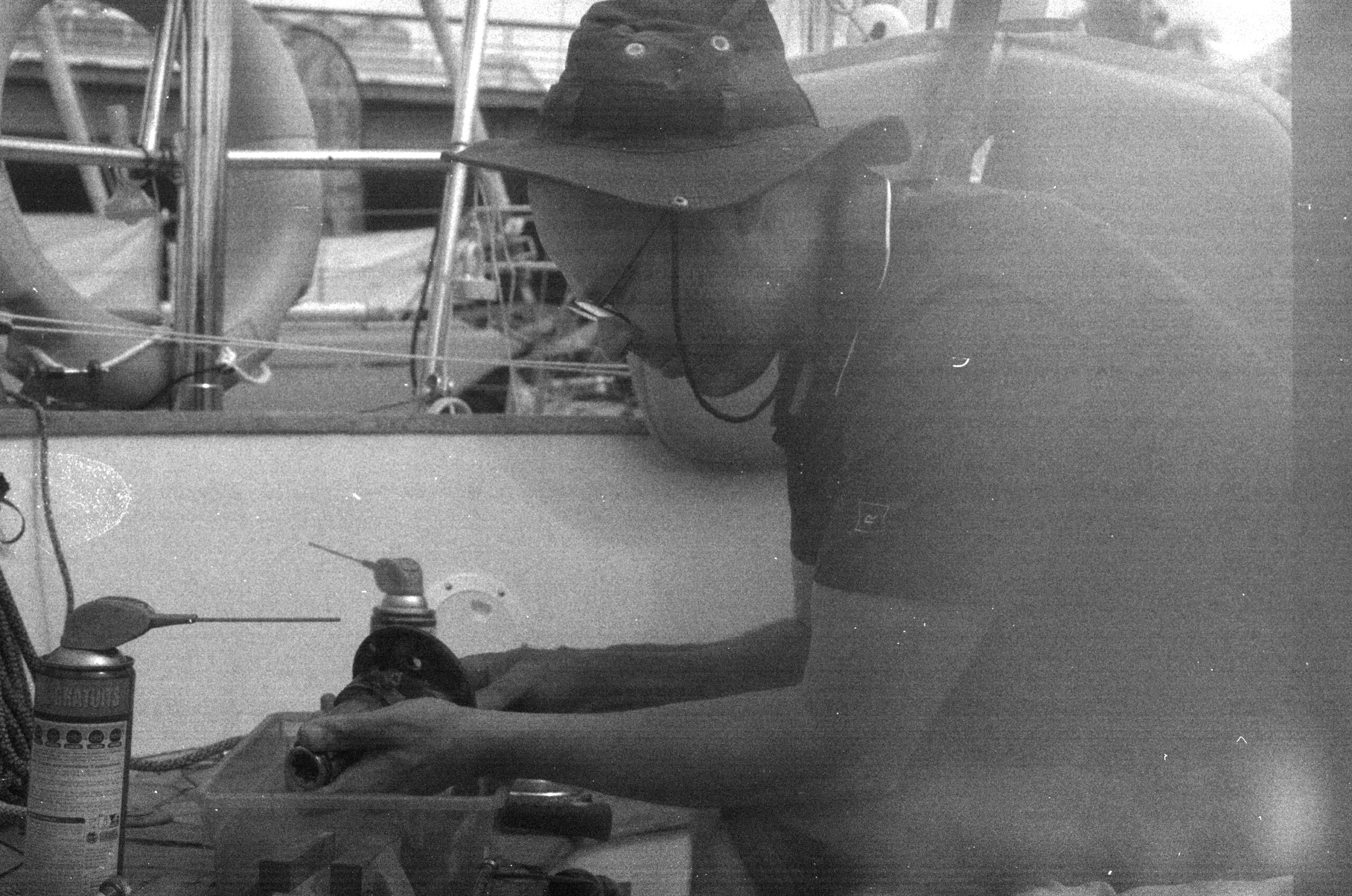
In his preparation update, Omri described the work behind the waiting: securing equipment and preparing the boat for changing conditions. On a small boat, an object not tied down properly can become more than a nuisance when the sea builds. Preparation is as much a part of the story as the miles added to the track. We still have no new personal report describing Dani’s preparations for the passage.
Elsewhere in the voyage, Louis has reached Recife. According to yesterday’s official report, he remained aboard on a mooring and had not yet announced a final decision about continuing. A port stop is not, in itself, a retirement announcement.
What happens when a front passes?
On a map it may look like a line of triangles. At sea, it is a meeting of different air masses. At a cold front, cold, dense air advances beneath warm air and lifts it. The passage can bring rain, gusts and a change in wind direction. For a sailor, what matters is not only how hard the wind blows, but where it now comes from and how the boat meets the sea.
That is also why preparation starts inside the boat, before the first wave arrives.
Knockdown: when the heel is no longer routine
Omri introduced a term worth understanding in his preparation message: knockdown. This is an extreme heel onto the boat’s side, with the mast potentially reaching the water. It differs from the normal heel of a sailing boat as wind fills the sails, and it does not necessarily mean the boat has rolled completely over.
Below the hull is the keel, with weight that helps lower the centre of gravity and resist heeling. Omri compared it to a self-righting toy. The image helps explain the idea but is not a safety guarantee: recovery depends on the boat’s design, condition and sea state, and a knockdown can cause damage and water ingress. We are explaining the term as part of the preparation he described, not reporting that it happened to Exodus or predicting that it will.
What comes after this system?
GGR’s 24 October report was already looking at another system being monitored for 27–28 October. This remains a dated forecast, not a guaranteed timetable for Dani. It explains why watching does not stop when one front passes: we need to see where the boats are afterwards and what changes in the next forecast.
After days of looking for a sign of wind, we will now follow how Exodus sails through the change it brings. The next position report will show the movement; Dani’s next message will add the life within it.
Sources and updates
Position data: 25 October, 04:00 UTC, 06:00 Israel time after the change to winter time; Day’s Run synchronised at 04:21 UTC. The 5.9-knot speed is a segment average, not a live speed. The daily figure is marked incomplete in the source because of a missing report, so it was not presented as a full total. Forecast and yesterday’s conditions: GGR, 24 October, not a live weather report from aboard. Omri’s messages of 22–24 October were read in full through the approved intake; their images were not checked or included.
Day’s Run — Daniel Pinsky · GGR — 24 October report
Front explanation: Met Office. Knockdown explanation and keel analogy follow Omri’s message of 23 October; the 27–28 October system is based on the GGR report of 24 October.